 measure
How Much Traffic and Revenue Does ChatGPT Send Small Businesses? (2026)
Most answers online are anecdotes. Here are the measured numbers, where they run out, and a 30-minute way to find yours.
- For most websites, AI assistants send well under 1% of traffic. Ahrefs found small sites (under 10K visits) got about 0.3% from AI, roughly three times its all-site average.
- In a 94-store ecommerce study, ChatGPT drove about 1.5% of non-branded organic revenue across 2025, rising to 2.2% in the second half.
- A large share of AI-driven visits arrives with no referrer, so GA4 files it as Direct. Your visible AI number is a floor.
- ChatGPT is very unlikely to be the main reason a small store's sales fell. Check channel data year over year before blaming AI.
- No public study yet measures AI revenue for small businesses specifically. The fastest way to know your number is to measure it: a GA4 channel group plus a free-text "how did you hear about us" field.
The short answer
If you run a small store or SaaS product, AI assistants are probably sending you a small but real amount of traffic, and those visitors often know what they want. They are almost certainly not yet a large share of revenue. The questions small-business owners ask on Reddit, like "is ChatGPT why my orders slowed down?" and "how many users did you get from ChatGPT?", mostly get anecdotes. Here is what the measured data says, and where it runs out.
How much traffic does ChatGPT send small websites?
The only public study that splits AI traffic by site size is Ahrefs' analysis of about 35,000 websites, published in March 2025. Sites with under 10,000 visits got 0.3% of their traffic from AI assistants, against about 0.1% across its whole sample (Ahrefs describes that figure as a share of referral traffic). Small sites appear to punch above their weight. One plausible reason, which the study does not test, is that AI answers cite niche pages that would not rank on page one of Google.
That data is now 18 months old, and AI referrals grew through 2025. Conductor's later data (May to September 2025, enterprise domains only) puts the cross-industry average at 1.08%, with 87.4% of AI referrals coming from ChatGPT. A reasonable expectation for a small site in 2026 is somewhere between those two figures, higher if you sell software or technical products. The two studies use different bases, so treat that range as a rough bracket, not a forecast. Our graded AI search statistics page compares the methods in more detail.
How much revenue does it drive?
| Study | What it found | Who was measured | Period |
|---|---|---|---|
| Visibility Labs | ChatGPT converted at 1.81% vs 1.39% for non-branded organic. AOV $204 vs $238. ChatGPT revenue was ~1.5% of non-branded organic revenue, 2.2% in H2 | 94 seven- and eight-figure ecommerce brands | Jan–Dec 2025 |
| Kaiser & Schulze (academic) | AI traffic underperformed every traditional channel except paid social on conversion, AOV and revenue per session, but was improving | 973 ecommerce sites, $20B combined revenue | Aug 2024–Jul 2025 |
| Invoca | Phone calls referred by ChatGPT had a 49% lead rate, the highest of any channel | 70M+ calls, 10 industries incl. home services and healthcare | Published Jul 2026 |
Read together: for stores, AI is a small, growing channel whose conversion rate is roughly comparable to organic, sometimes better and sometimes worse. For service businesses that take phone leads, the Invoca data suggests AI-referred callers are unusually ready to buy. Sources: Search Engine Land on Visibility Labs, Digital Commerce 360, PPC Land on Invoca.
Worked example: what this could mean for a small store
These are illustrative assumptions, not a benchmark. Take a store with 20,000 sessions a month, a 2% conversion rate and a $60 average order, so about $24,000 in monthly revenue from 400 orders.
- Visible AI sessions: at the Ahrefs small-site share (0.3%) that is about 60 sessions a month; at Conductor's 1.08% it is about 216.
- Orders: if AI visitors convert at the store's average 2%, that is roughly 1 to 4 orders, or about $70 to $260 a month.
- Hidden share: if, as in the Loamly dataset, only about 30% of AI-driven visits carried a referrer, the true figure could be up to about three times the visible one. That ratio comes from a single vendor and may not hold for your site.
Even in the upper case this is a few percent of revenue at most. That is why AI rarely explains a sudden sales drop on its own, and why the useful question for a small business is less "how much do I get today" and more "am I recommended at all when buyers ask". Our guides to AI search visibility for ecommerce and for SaaS cover how to improve the second one.
Why your analytics undercount it
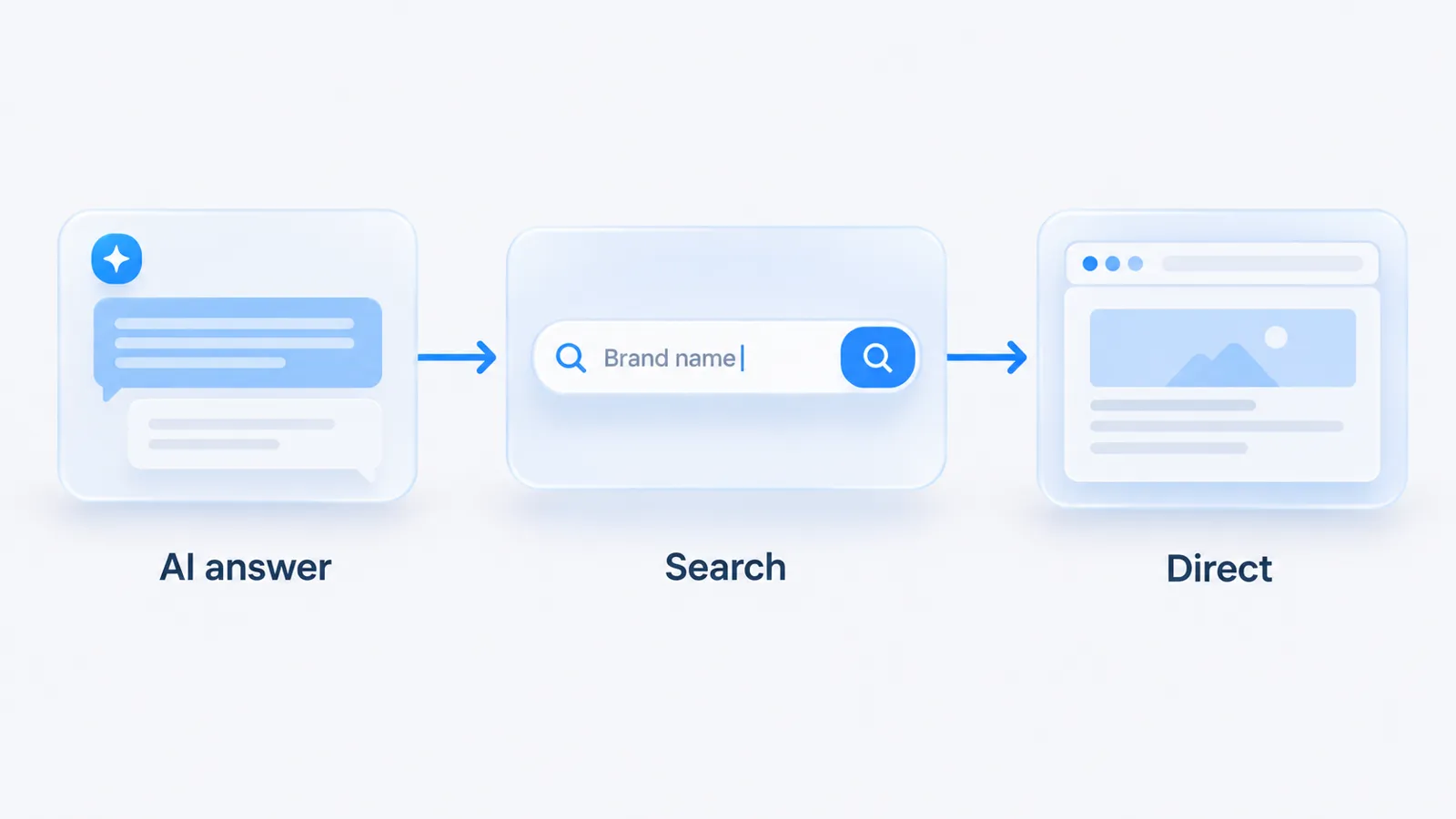
When someone clicks a link inside ChatGPT, GA4 usually records a referral from chatgpt.com. But many people read the answer, then type your name into Google or straight into the address bar. Those visits show up as branded search or Direct. One vendor dataset (Loamly, 446,405 visits) found about 70% of identified AI visits arrived with no referrer at all. Loamly sells detection software, so treat the exact figure with care, but the direction is consistent with what owners describe: "a trickle of chatgpt.com sessions" plus customers who say "ChatGPT recommended you". Source: Ecommerce Fastlane.
How to measure your own number in 30 minutes
1. Give AI its own channel in GA4
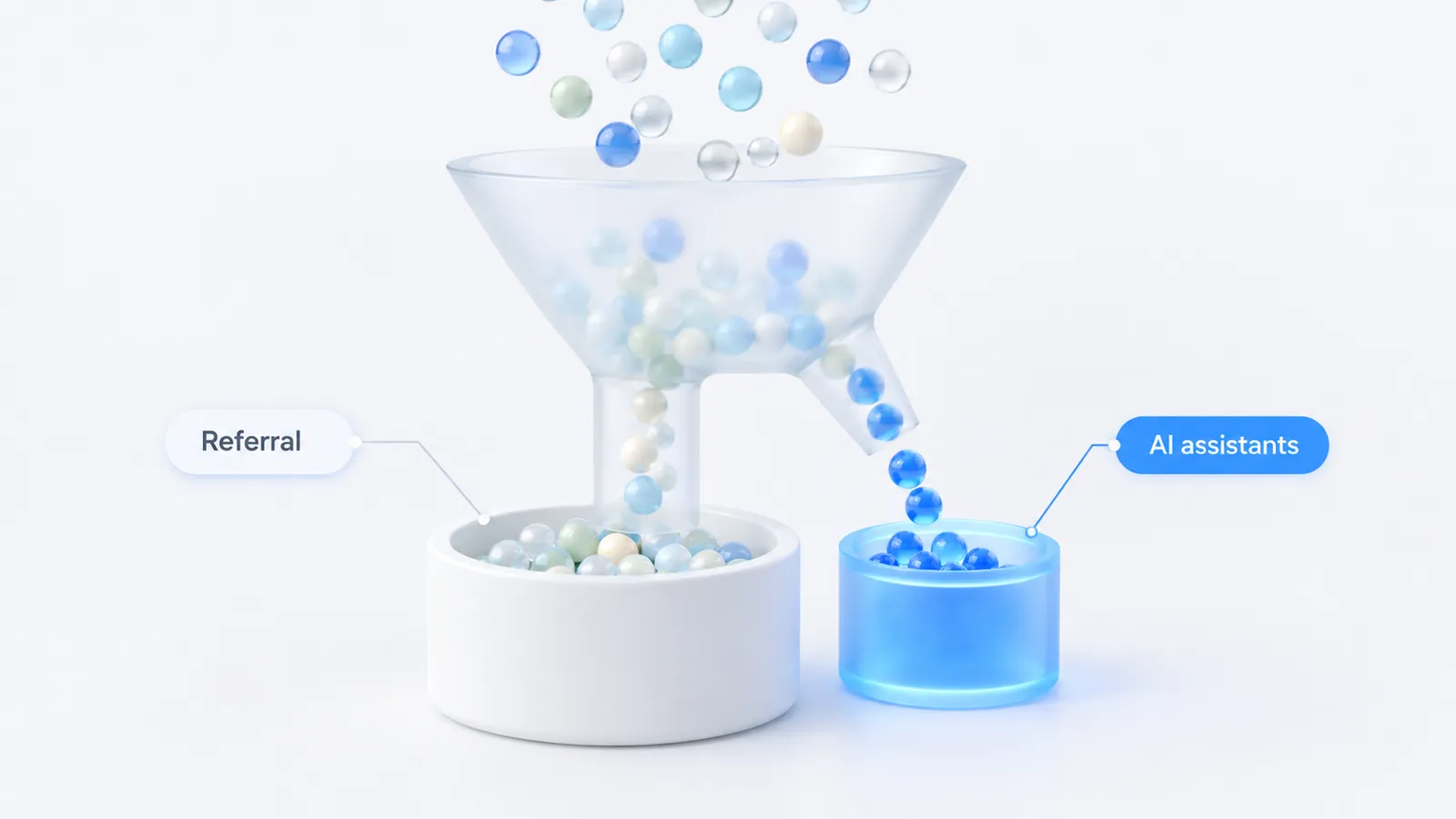
In GA4, go to Admin, Data display, Channel groups, and copy the default group. Add a channel called "AI assistants" above Referral, with the condition source matches regex:
chatgpt\.com|openai\.com|perplexity\.ai|gemini\.google\.com|claude\.ai|copilot\.microsoft\.comIt only affects data from the moment you add it, so do it now even if the numbers look tiny.
If you would rather skip the regex upkeep, Measure's AI traffic attribution reads the same referrals from GA4 read-only and splits sessions by assistant, with key events and top landing pages.
2. Ask customers
Add a "How did you hear about us?" field at checkout or signup. Make it free text, not a dropdown: a dropdown without a ChatGPT option hides every AI answer. This catches the visits analytics files as Direct.
3. Compute three numbers each month
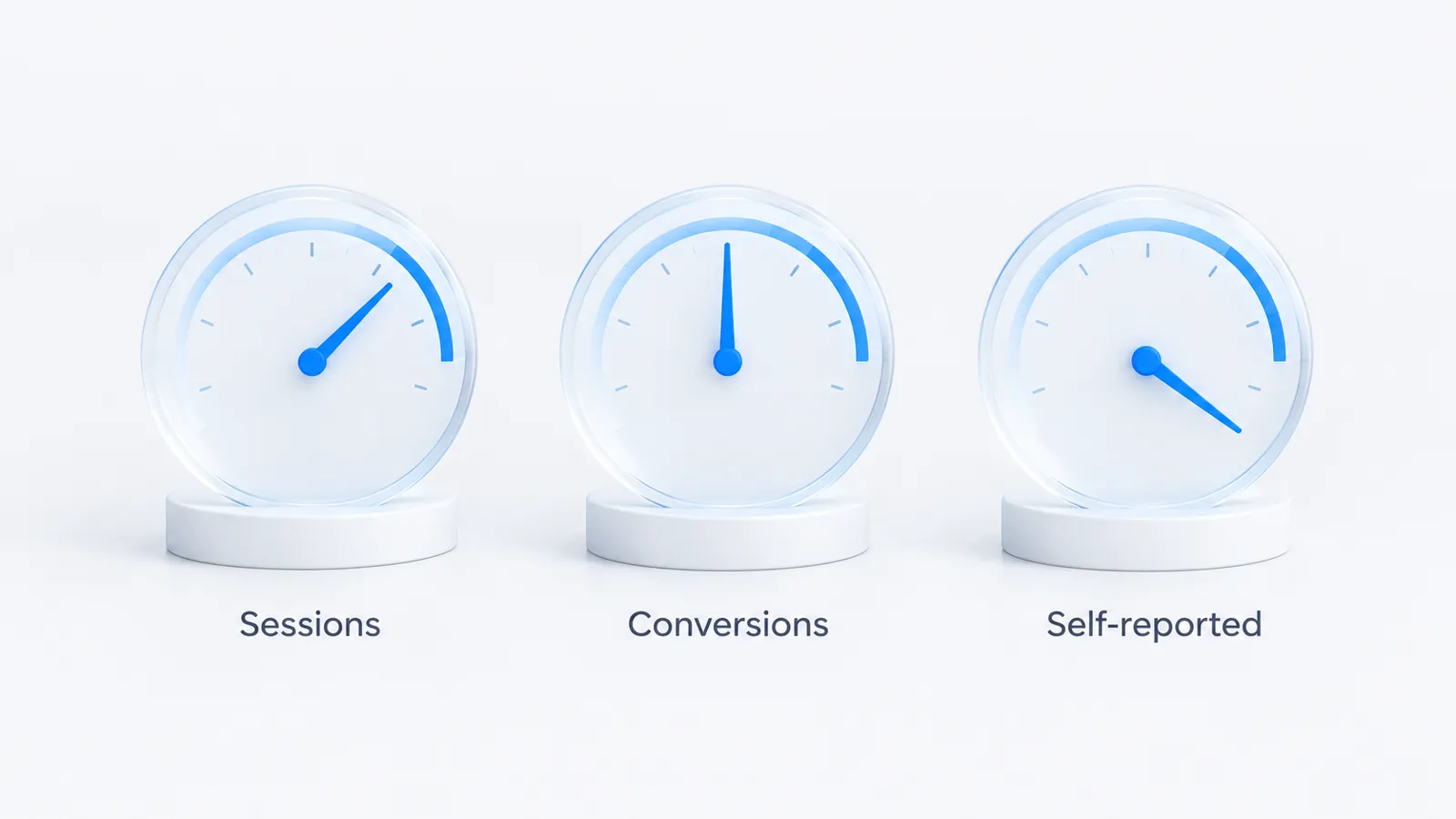
- AI share of sessions: AI-assistant sessions ÷ all sessions.
- AI share of conversions: AI-assistant conversions ÷ all conversions. If this is higher than the share of sessions, AI visitors convert better than average for you.
- Self-reported AI share: answers mentioning ChatGPT, AI, Perplexity etc. ÷ all answers. A gap between this and number 2 is a rough indication of hidden AI traffic.
Traffic data tells you what already happened. To see whether assistants mention you before buyers click, run a free check with the AI visibility checker, or follow our guide to tracking brand visibility in ChatGPT.
Is ChatGPT why my sales dropped?
Probably not on its own. Work through this before changing strategy:
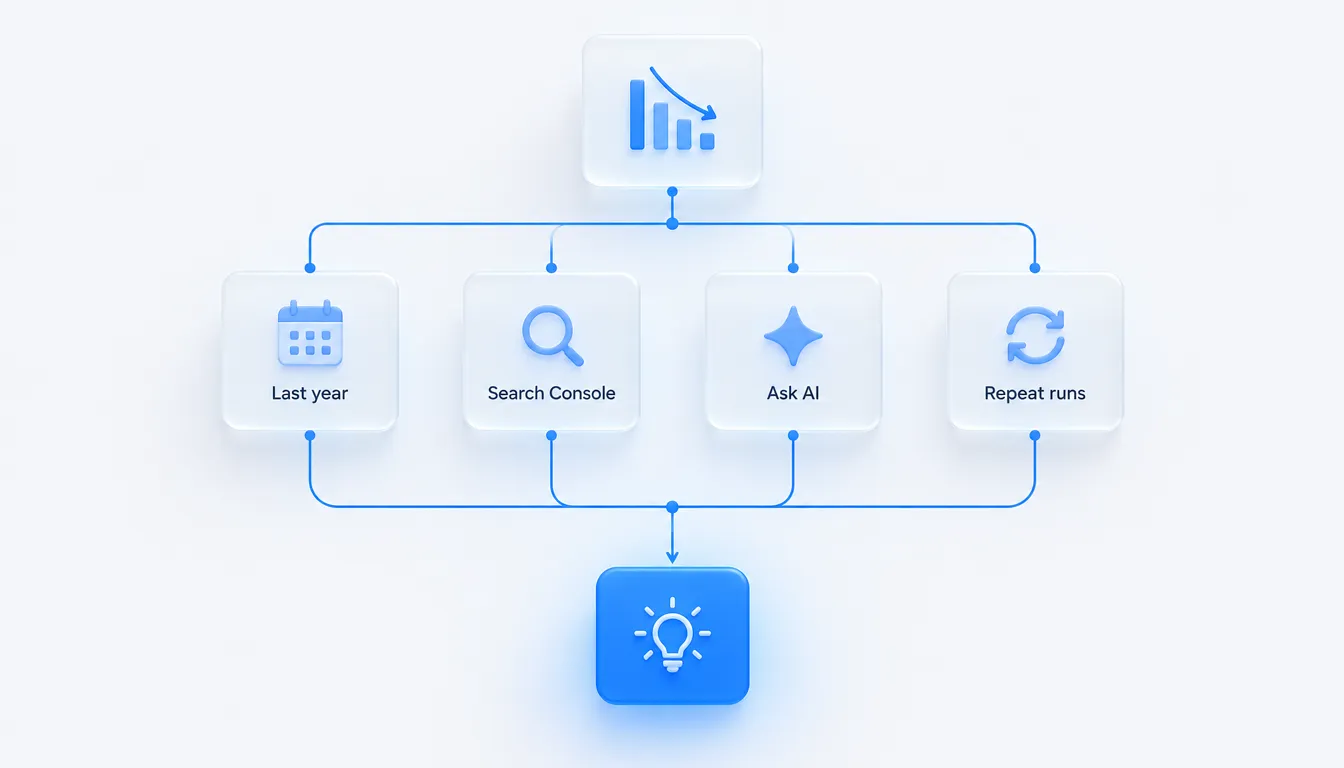
- Compare this period with the same period last year, by channel. Seasonality explains a lot of "slow months".
- Check Google organic clicks in Search Console. AI Overviews reduce clicks to top results, and that effect is much bigger than lost ChatGPT traffic for most sites.
- Ask ChatGPT the questions your customers ask ("best X for Y"). If a competitor is named and you are not, open the pages it cites. They usually answer the question in plain text on the page.
- Run the same questions several times. AI recommendation lists change on almost every run, so judge by how often you appear, not one answer.
If the Search Console check shows falling clicks on queries where you still rank, read how AEO and SEO differ before rewriting pages.
What nobody has measured yet
Every study above is either enterprise-only, several months old, or not split by business size. There is no public benchmark for what share of a small store's or small SaaS product's revenue comes from AI assistants. We will update this page when better data exists. Until then, the three numbers above give you a baseline that is more accurate for your business than any industry average.
Frequently asked questions
How much traffic does ChatGPT send small websites?
Usually well under 1%. Ahrefs found sites with under 10,000 visits got about 0.3% of traffic from AI assistants (March 2025), roughly three times its 0.1% average across all ~35,000 sites. AI referrals grew through 2025, so current figures are likely somewhat higher.
How much revenue does ChatGPT drive for ecommerce stores?
In a study of 94 ecommerce brands, ChatGPT drove $474,000 against $32.1 million from non-branded organic search in 2025, about 1.5% of organic revenue, rising to 2.2% in the second half of the year.
Why doesn't GA4 show all my ChatGPT traffic?
Many AI-driven visits arrive without a referrer, for example when someone reads the answer and then types your name into the browser, so GA4 records them as Direct or branded search. Add a free-text 'how did you hear about us' field to catch them.
How do I track ChatGPT traffic in GA4?
Create a custom channel group with an 'AI assistants' channel above Referral, matching sources such as chatgpt.com, perplexity.ai, gemini.google.com, claude.ai and copilot.microsoft.com. It applies from the moment you create it.
We build Measure, a self-serve platform that tracks how AI engines describe and recommend brands, and connects that visibility to real traffic and revenue. Everything here is written from what we see in the data every day.