 measure
AI search visibility, in practice
Guides, roundups and data on getting your brand recommended by ChatGPT, Perplexity, Gemini, Claude and Google AI Overviews.
17 articles · Updated October 2026

The 15 Best AI Search Visibility Tools (2026)
The 15 best AI search visibility tools for 2026 compared on engine coverage, accuracy, citations, attribution and cost per prompt. Dated pricing, a published scoring rubric, and tools we don't sell.
Read articleTool picks
Dated, criteria-first roundups of AI visibility, GEO and AEO tools, including the ones we don't sell.

7 Free Tools to Check Your AI Search Visibility (2026)
The best free tools to check whether AI engines can read, cite and recommend your site, from AI crawler checkers to one-off visibility checks. No credit card required.
Read article
Best AEO Tools (2026): A One-Week Trial Protocol and Scorecard
How to test AEO tools on your own buyer questions in seven days, with a weighted scorecard, plus six tools worth a shortlist and their honest trade-offs.
Read article
Best GEO Tools (2026): Picked for the Optimization Loop, Not the Dashboard
GEO tools compared on what they help you change: diagnosing missing prompts, finding the sources AI engines cite, fixing pages, and verifying the result. Includes a worked example.
Read articleEngine playbooks
How each answer engine searches, what it cites, and how to track your brand inside it.

AEO vs SEO: The Real Differences and How to Win Both
AEO vs SEO compared on 14 dimensions: how answer engines like ChatGPT, Perplexity and Google AI Overviews pick sources vs how Google ranks pages, where the work overlaps, 8 real differences, and one plan and scorecard for both.
Read article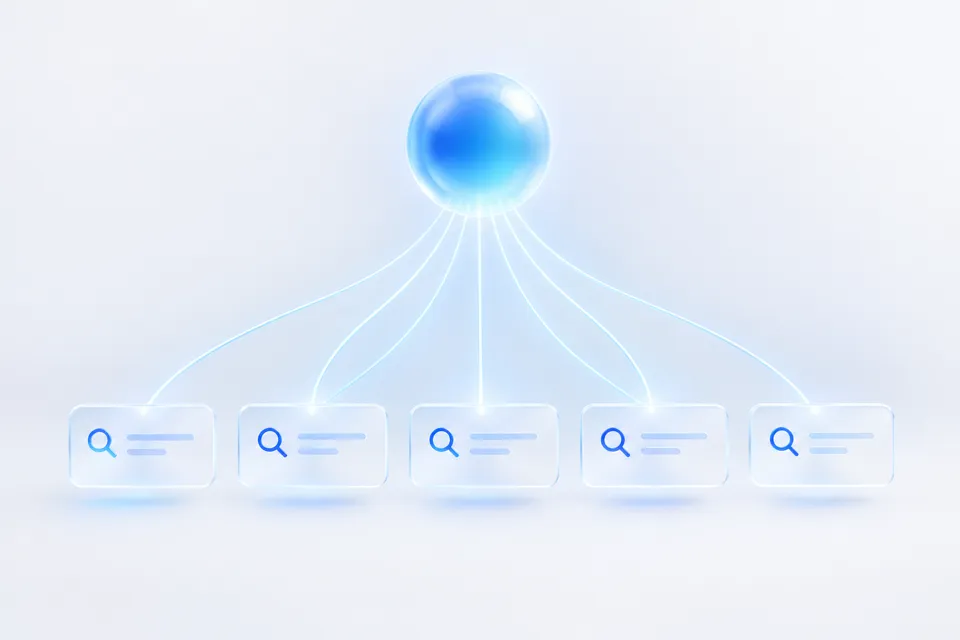
What Is Query Fan-Out? How AI Search Splits Prompts (and How to Optimize for It)
Query fan-out is how ChatGPT, Google AI Mode, Perplexity, Gemini and Claude split one prompt into many sub-queries before answering. How it works, 8 query types, 7 ways to find them, and an 8-step optimization playbook.
Read article
How to Track Your Brand's Visibility in Claude (2026)
How to monitor whether Anthropic's Claude recommends your brand, why Claude's growing use as a research and coding assistant matters, and how to improve your standing.
Read article
How to Track Your Brand's Visibility in Google Gemini & AI Overviews (2026)
How to track whether Google's Gemini and AI Overviews mention your brand, why Google coverage is the hardest and most valuable, and how to improve the sources they cite.
Read article
How to Track Your Brand's Visibility in Perplexity (2026)
How to monitor whether Perplexity cites and recommends your brand: why its citations are unusually transparent, which prompts to track, and how to win the sources it pulls from.
Read article
How to Track Your Brand's Visibility in ChatGPT (2026)
A step-by-step guide to tracking whether ChatGPT recommends your brand: the prompts to watch, how to sample answers reliably, what to measure, and how to improve your mention rate.
Read articleBy business type
What AI search visibility looks like for agencies, ecommerce and SaaS, and what to track first.

AI Search Visibility for SaaS: The 2026 Playbook
How B2B SaaS companies track whether ChatGPT, Perplexity and Claude recommend their product in buyer research, and the content moves that improve AI citations.
Read article
AI Search Visibility for Ecommerce & Retail Brands (2026)
How ecommerce and retail brands track whether AI engines, including Amazon's Rufus, recommend their products, and how to win product-level visibility in AI answers.
Read article
AI Search Visibility for Agencies: How to Track & Report It for Clients (2026)
How marketing and SEO agencies track AI search visibility across multiple client brands, build white-label reports, and turn AEO into a retainer line item.
Read articleMeasurement & ROI
Connecting AI visibility to traffic, pipeline and revenue in GA4 and Search Console.

Research
Original data from Measure's daily scans across ChatGPT, Perplexity, Gemini, Claude and AI Overviews.
Search Console's Generative AI Report: How to Benchmark Your AI Overview Impressions
What Google Search Console's generative AI performance report shows, why it has impressions but no clicks, and how to compute your own AI impression share benchmark.
Read article
How Much Traffic and Revenue Does ChatGPT Send Small Businesses? (2026)
How much traffic and revenue ChatGPT and other AI assistants actually send small ecommerce and SaaS businesses, what the studies show, and how to measure your own number in GA4.
Read article
AI Search Statistics: Which Numbers to Trust (2026)
AI traffic share, conversion rates, AI Overview CTR, tracker accuracy and llms.txt: the most-cited AI search statistics, graded by sample, method, independence and date.
Read articleStart here: a reading path for AI search visibility
Most teams arrive with one of four questions: what is this, how does each engine decide who to recommend, which tool should we use, and how do we prove it is worth the effort. The articles below are grouped by those questions. Read them in order if you are new; jump to the lane you need if you are not.
1. Understand the shift from rankings to answers
In a classic search result you compete for ten blue links. In an AI answer you compete to be one of a handful of brands the engine names, and one of the sources it cites. Begin with what AI search visibility means, then AEO vs SEO for what carries over from SEO and what doesn't. The query fan-out guide explains why one prompt becomes many hidden searches, which is the main reason pages that rank well can still be ignored by an answer engine.
2. Learn how each engine searches and cites
The engines do not behave alike. ChatGPT, Perplexity, Gemini and Claude use different retrieval sources, cite at different rates and favour different page types. Each playbook covers how that engine finds sources, what a citation looks like there, and how to track your brand in it:
- ChatGPT, usually the largest audience
- Perplexity, the most citation-heavy
- Gemini, closest to Google's own index
- Claude, growing fast in B2B research
If Google is your main channel, add the Search Console generative AI report guide and the AI Overviews glossary entry.
3. Apply it to your type of business
What you should track first depends on how buyers find you. Ecommerce brands care about product and “best X for Y” prompts; SaaS companies about category, alternative and comparison prompts; agencies about reporting the same metrics across many clients. See the guides for ecommerce, SaaS and agencies. Smaller local or service businesses should read ChatGPT traffic for small businesses.
4. Choose a tool, with the criteria made explicit
Our roundups list the criteria before the picks and include tools we don't sell. Start with the best AI search visibility tools, then the narrower GEO and AEO lists. On a budget, the free tools roundup covers what you can do for nothing, including our own AI visibility checker. For head-to-head detail, see the comparison hub.
5. Prove it's working
Visibility only matters if it turns into traffic and revenue. The AI search ROI guide shows how to connect tracked prompts to GA4 sessions and conversions, and the AI search statistics page collects sourced, dated adoption figures for building the business case.
How we write these articles
- Sources are linked and dated. Statistics name their source and retrieval date; we drop a number rather than guess it.
- Tools are tested, not copied. Roundups describe what each product does on its own pages and in use, and say where a competitor is the better fit.
- Pages are kept current. Each article shows its last update, and fast-moving pages are re-checked on a schedule.
AI search visibility: common questions
What is AI search visibility?
AI search visibility is how often, and how favourably, AI answer engines such as ChatGPT, Perplexity, Gemini, Claude and Google AI Overviews mention or cite your brand when people ask questions in your category. It is measured per prompt and per engine: whether you are mentioned, where you appear in the answer, which competitors appear alongside you, and which pages the engine cites as sources.
Where should I start if I'm new to AI search visibility?
Start with the definition and the difference from SEO (the AI search visibility glossary entry and AEO vs SEO), then read the playbook for the engine your buyers use most, usually ChatGPT. After that, run a free check on your own brand and pick a tool once you know which prompts and engines matter to you.
Is AEO or GEO different from SEO?
They overlap but are not the same. SEO optimises for ranked links on a results page. AEO and GEO optimise for being named or cited inside a generated answer, which depends on how the engine searches (often several fanned-out sub-queries), which sources it trusts, and whether your pages contain clear, quotable statements. Good technical SEO is still the foundation, because most engines retrieve from a web index before they write.
How do I measure the ROI of AI search?
Combine three signals: visibility (mention and citation rates on the prompts you track), traffic (AI-referral sessions in GA4, which now has a native AI assistant channel), and outcomes (conversions from those sessions). Our ROI guide walks through the setup and the attribution caveats, since many AI answers drive brand searches rather than direct clicks.
How often is this blog updated?
Roundups and statistics pages carry a dated 'last updated' line and are re-checked on a rolling schedule; tool prices and features are re-verified on each refresh. Engine playbooks are revised when an engine changes how it searches or cites.
Compare tools
All comparisonsSee how AI answers about you
Track the prompts your buyers ask and who the engines cite, every day.